
Server and storage supply, racked and commissioned on site
From a single tower server in a branch office to a rack build with UPS and backup — specified against your real data growth, not a vendor’s upgrade cycle.
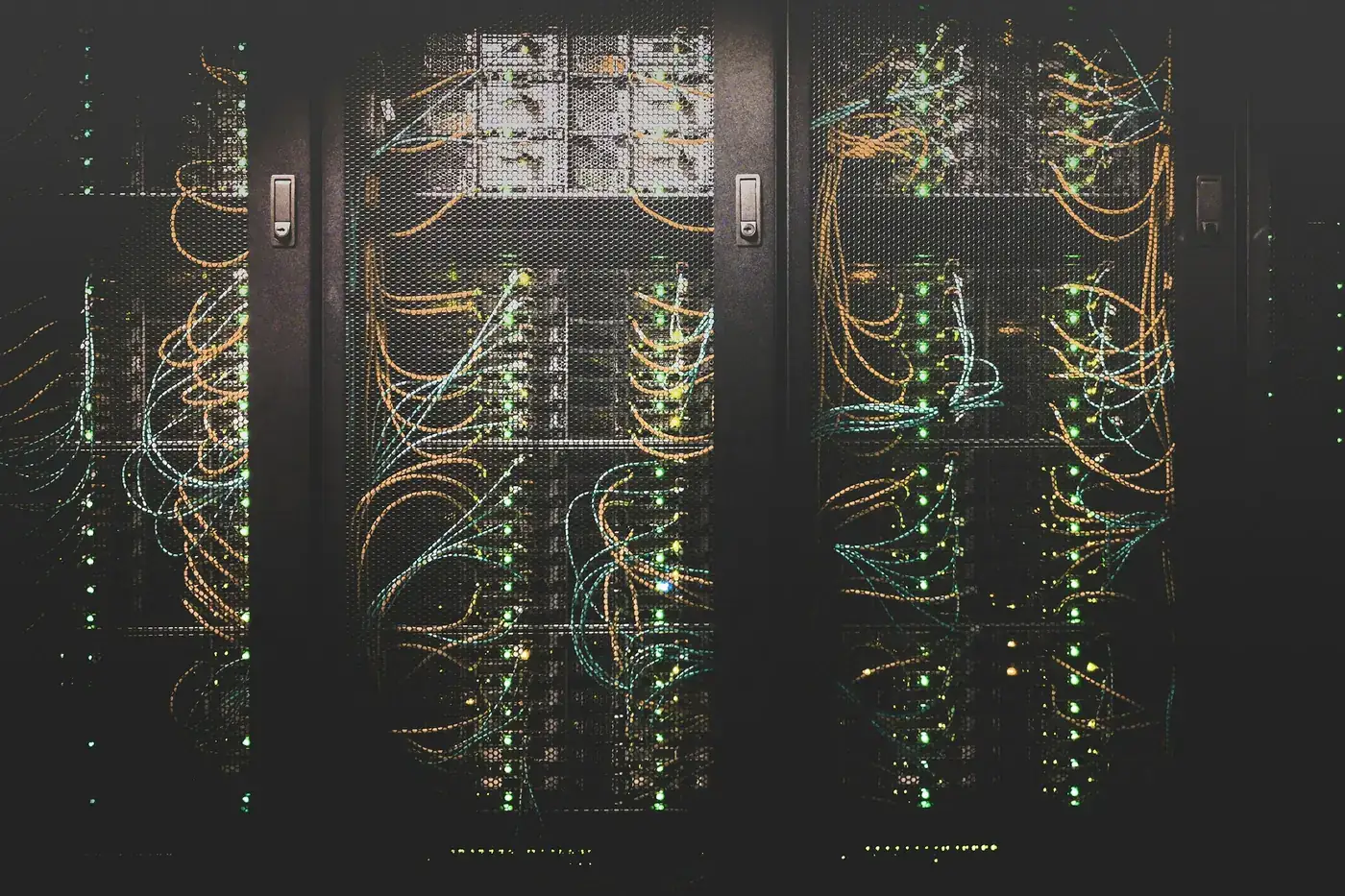
A server is the one purchase where under-specifying and over-specifying both hurt, and where the room it lives in matters as much as the box itself. We have walked into enough server "rooms" in Pakistan that were converted storerooms with a domestic air conditioner and a single unprotected power feed to know that the equipment is rarely the reason things fail.
So our quotations cover the whole picture. Drive configuration and RAID level chosen against how much data you actually generate per month rather than a round number. Power draw calculated and checked against what the circuit and UPS can genuinely carry. Thermal load stated, so you find out before purchase whether the room can hold the temperature or whether the budget needs to include cooling.
Commissioning happens on site: rack and rail fitting, RAID build, firmware baseline, out-of-band management configured and tested, and a documented power-loss and restart test before we hand over. We would rather find the problem during commissioning than have you find it during the first extended outage.
How we handle servers & storage
Capacity sized on measured growth
We ask for your current data volume and monthly growth, then size for a realistic horizon. Buying five years of headroom on day one usually costs more than adding capacity in year three.
RAID and drive class chosen deliberately
Drive endurance ratings and RAID level are matched to the workload. A virtualisation host and an archive target need different drives, and putting desktop-class disks in a server is a failure scheduled for later.
Power and thermal load verified
Draw at load is calculated against your existing UPS and circuit capacity, and heat output is stated in the quotation so cooling can be budgeted before, not after.
Rack, rail and cable management
Proper rails, cable management arms and labelled patching. A rack that can be worked on at 3am without tracing cables by hand is worth the extra hour it takes to build.
Out-of-band management configured
iDRAC, iLO or equivalent set up, secured on a management segment and tested, so remote diagnosis does not require someone to drive to site.
Backup target commissioned with it
A server without a tested restore is not protected. Where you want it we supply and configure the NAS or backup target alongside, and prove a restore before handover.
From enquiry to working servers & storage
These steps are specific to servers & storage — the survey, the checks and the commissioning differ meaningfully by category.
Workload and growth review
What runs on it, how many concurrent users, how much data today and how fast that is growing. If you are virtualising, we look at the guest inventory rather than a headline core count.
Site and power survey
We look at the room: available rack space, circuit capacity, existing UPS runtime, ventilation and physical security. This is the step most quotations skip and most failures trace back to.
Configuration and redundancy proposal
Drive layout, RAID level, memory configuration, redundant power supply options and warranty tier, each with its cost stated so you can decide where redundancy is worth paying for.
Bench build and firmware baseline
Assembly, firmware brought to a known-good baseline, RAID initialised and burn-in run before the unit ships. Initialising a large array on site wastes a day of your window.
Rack, commission and test
Installed, cabled, labelled, management interface configured, and a deliberate power-loss and restart test performed with you present so you have seen it come back cleanly.
Documentation and support handover
Rack diagram, IP and credential schedule, RAID layout and warranty terms handed over as a document set. Optional AMC cover picks up firmware, health checks and drive replacement.
Common problems with servers & storage — and what we do about them
These are the failures we are called in to fix. Each one is preventable at specification stage.
Server room that cannot hold temperature
Thermal load is calculated and stated before purchase. Where the room cannot cope we say so and quote the cooling separately rather than letting you discover it in June.
UPS that cannot actually carry the load
We measure the real draw against your existing UPS capacity and battery age. A UPS rated for the load five years ago frequently is not any more.
Desktop-class drives in a server chassis
Drive endurance and duty rating quoted explicitly per line. The saving on consumer disks disappears the first time an array rebuilds.
No tested restore path
Where a backup target is in scope we perform and document a live restore during commissioning. An untested backup is an assumption, not a safeguard.
Nobody can diagnose it remotely
Out-of-band management configured, secured and tested at handover, so a fault in Swat does not automatically mean a vehicle on the road at all.
Grid instability is the real design constraint
Server specification in Pakistan cannot be separated from power. With commercial tariffs past PKR 48 per unit and outages still routine outside the main city feeds, a server built without protected power and adequate runtime is a server waiting for an unclean shutdown. We size UPS runtime for a controlled shutdown as a minimum rather than an optional extra, and for sites already running solar we check inverter transfer behaviour before assuming the equipment will ride through a switchover.
Servers & Storage — questions we get asked
Specific to this service line. If yours is not covered here, ask us directly and we will answer it properly.
How do I know what size server my organisation actually needs?
Start from workload rather than from a budget figure. We ask what applications will run, how many people use them at once, how much data you hold now and how much you added over the last twelve months. From that we can size processor, memory and storage against a three-to-four-year horizon, which is generally the right planning window in Pakistan given how import pricing moves. Buying for a five-year peak on day one is usually more expensive than starting right and expanding once.
Can you install a server if we do not have a proper server room?
Often yes, but we will tell you honestly what the compromises are. Many organisations run a tower or short rack in a secured office space perfectly successfully, provided the power feed is protected, there is enough air movement, and physical access is controlled. What we will not do is install into a sealed cupboard with no ventilation and let you assume it is fine. Where the space genuinely will not work, we quote the wall-mount rack, ventilation or split-unit cooling separately so you can see the real cost of doing it properly.
What happens if a drive fails after installation?
If the server is under manufacturer warranty we raise and pursue the replacement claim on your behalf, and for accounts on an AMC we hold or source a matching drive so the array can be rebuilt without waiting on the claim cycle. The important part is what happens before that: we configure the RAID level so a single drive failure is survivable, verify the array alerts are actually reaching a monitored address, and confirm that during commissioning. A degraded array nobody was told about is how single failures become data loss.
Do you supply refurbished servers, and should we consider them?
We can source refurbished enterprise hardware, and for some cases — a test environment, a secondary backup target, a branch file server — it is a genuinely sensible use of budget. We will always label it clearly as refurbished on the quotation with its remaining or third-party warranty term stated. What we will not do is quote refurbished stock against a tender that specifies new, or let a refurbished unit reach you described as anything other than what it is.
How long does a server installation take once the hardware arrives?
A single tower server with a straightforward configuration is typically a half-day on site, because the assembly, firmware baseline and RAID initialisation have already happened at our bench. A rack build with structured cabling, UPS integration and a backup target commissioned alongside is more realistically one to two days. We schedule the disruptive portion — anything requiring the power feed to be interrupted — outside your working hours by default.
Related services
These are usually specified alongside servers & storage.
Power & Solar Solutions
Solar, inverters, battery storage and UPS — sized against your actual load profile and tariff, with the payback arithmetic shown honestly.
Network Equipment
Switches, routers, structured cabling and wireless — designed for the building you actually have, then labelled and documented properly.
Computers & Laptops
Desktops, laptops and workstations sourced against your actual workload, imaged and asset-tagged before they reach your team.
Sectors we supply this to
The constraints differ considerably by sector — these pages set out how.
Healthcare
Hospitals, clinics and diagnostic centres — clinical workstations, records infrastructure, protected power and surveillance that meets safeguarding needs.
Government & Public Sector
Departments, authorities and district offices — tender-compliant supply with the documentation, substitution justification and delivery evidence audit requires.
Banking & Finance
Branch networks, ATMs and back office — standardised rollouts, segmented networks, evidential surveillance and power that does not interrupt trading.
Tell us the workload, not the model number.
Describe what the server has to run and how your data is growing. We will size it, survey the power and space, and quote the whole picture including what the room needs.