
Printer and scanner supply specified on cost per page
Departmental MFPs, high-volume mono, label and document scanners — chosen on what the consumables will cost you over three years, not the purchase price.
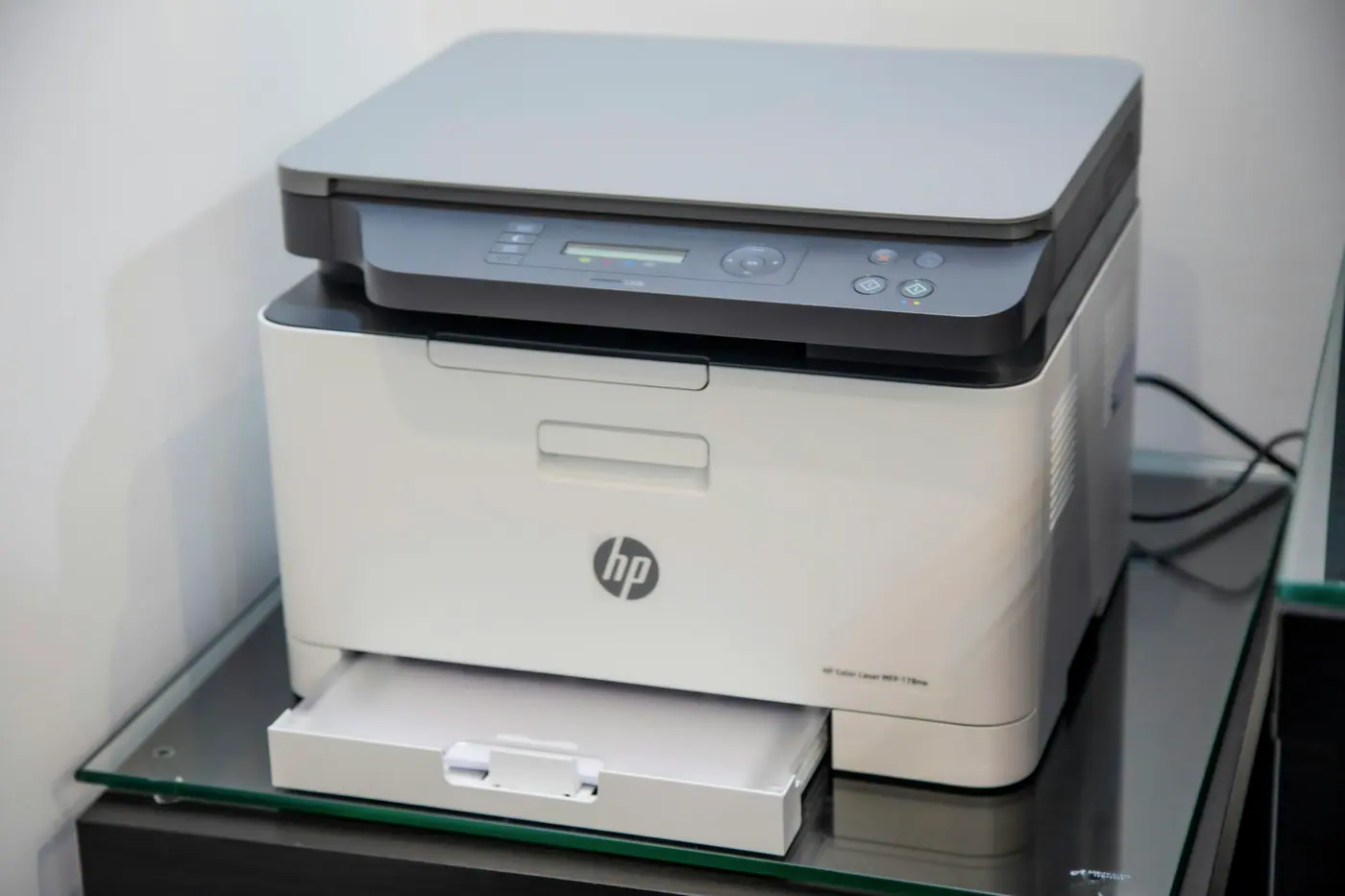
Printing is the category where the headline price misleads most reliably. A machine that costs forty thousand rupees less at purchase can cost several times that difference in toner over three years, and in Pakistan there is a second trap: cartridges for a model that was discontinued locally become progressively harder and more expensive to obtain until the machine is effectively stranded.
We quote total cost per page, not device price. That means yield-rated consumable cost, duty cycle against your actual monthly volume, and — critically — whether the consumables for that model are reliably available in Pakistan today and likely to remain so. A device with a beautiful cost-per-page on paper is worthless if its cartridge is a six-week import every time.
For institutional buyers there is usually a scanning requirement hiding behind the printing one. Records departments, admissions offices and hospital filing rooms need document capture that handles mixed sizes, poor-quality originals and duplex without jamming through a thousand-page batch. We specify that separately rather than assuming the MFP flatbed will cope.
How we handle printers & scanners
Quoted on three-year cost per page
Device price, yield-rated consumable cost and expected volume modelled together. The cheapest machine to buy is very rarely the cheapest machine to run.
Consumable availability checked first
We verify that cartridges and drums for the proposed model are in reliable local supply before recommending it, and flag anything approaching end-of-life in the Pakistani channel.
Duty cycle matched to real volume
Monthly duty cycle is checked against your actual page counts. Running a desktop-class device at departmental volume is the most common cause of premature failure we see.
Network printing configured properly
Static addressing, correct drivers deployed, secure release or PIN printing where confidentiality requires it, and scan-to-folder or scan-to-email set up and tested.
Document capture specified separately
Where there is a real scanning workload we specify a dedicated sheet-fed scanner with the right ADF capacity and duplex handling rather than relying on an MFP glass.
Consumables on standing supply
Ongoing cartridge and drum supply for account customers, so the finance department is not raising a fresh purchase order every time a toner runs out.
From enquiry to working printers & scanners
These steps are specific to printers & scanners — the survey, the checks and the commissioning differ meaningfully by category.
Volume and document-type audit
Pages per month per department, colour versus mono split, paper sizes in use, and what actually gets scanned. Most organisations over-estimate colour need and under-estimate scanning.
Cost-per-page modelling
We model two or three candidate devices across a three-year horizon including consumables, so the comparison is on running cost rather than purchase price.
Placement and network planning
Where devices sit, how many people share each one, and whether the network drop and power exist at that point. A departmental MFP in the wrong corridor gets used by nobody.
Installation and driver deployment
Devices installed, addressed, drivers deployed across the estate, and scan destinations configured and tested against your file server or mail system.
User walkthrough
A short hands-on session per site covering secure release, scanning workflow and consumable replacement, because a feature nobody was shown is a feature nobody uses.
Consumable and service cover
Standing consumable supply with agreed reorder points, plus optional service cover for jams, roller wear and fuser replacement.
Common problems with printers & scanners — and what we do about them
These are the failures we are called in to fix. Each one is preventable at specification stage.
Cartridges become unobtainable locally
Consumable channel availability verified before the device is recommended, and models nearing end-of-support in Pakistan excluded from the shortlist entirely.
Desktop printer running departmental volume
Duty cycle matched to measured monthly pages. Devices are specified with headroom rather than exactly at their rated ceiling.
Cheap device, expensive running cost
Three-year cost-per-page comparison presented alongside purchase price so the real total is visible at decision time.
Scan-to-email or scan-to-folder never worked
Scan destinations configured and tested against your actual mail server or file share during installation, with credentials documented for your IT staff.
Confidential documents left on the output tray
Secure release or PIN printing configured where the department handles personal, medical or financial records.
Consumable supply is the constraint that bites in KPK
Cartridge availability outside Karachi, Lahore and Islamabad is genuinely thinner, and models that move slowly nationally can be effectively unavailable in Peshawar without a special order. That is why consumable channel depth carries real weight in our recommendations for KPK buyers. A device we would happily specify for a Karachi head office may not be the right choice for a district office in Bannu, and we will say so rather than quoting the same shortlist everywhere.
Printers & Scanners — questions we get asked
Specific to this service line. If yours is not covered here, ask us directly and we will answer it properly.
Should we buy or lease printers for a large office?
In Pakistan, outright purchase with a separate consumables arrangement is usually the better arithmetic for organisations printing under roughly ten thousand pages a month, because managed-print leasing here tends to carry a significant premium over the equivalent capital purchase. Above that volume, or where you want a single predictable monthly figure for budgeting, a service-and-consumables agreement starts to make sense. We will model both against your actual page counts and show you the crossover point rather than pushing whichever suits us.
How do we stop being locked into expensive original cartridges?
The honest answer is that you largely cannot, and should be careful about trying. Third-party and refilled cartridges are widely available in Pakistan and some are perfectly acceptable, but they void warranty on most business devices and a leaking cartridge can damage a drum unit that costs more than the saving. What actually reduces consumable cost is choosing the right device class at purchase — a machine with high-yield cartridge options and a separate drum has a far better long-run economics profile than a cheap device with an all-in-one consumable, regardless of who makes the toner.
What kind of scanner do we need for digitising old records?
For bulk record digitisation you want a dedicated sheet-fed document scanner with a substantial automatic document feeder, single-pass duplex, and ultrasonic double-feed detection — not an MFP flatbed. Old files in Pakistani institutional archives are usually mixed sizes, sometimes stapled, often on thin or degraded paper, so feeder reliability and jam handling matter more than raw resolution. We will ask to see a sample of the actual documents before recommending, because a scanner that handles clean A4 beautifully can struggle badly with a 1990s register.
Can you supply printers against a government tender specification?
Yes. Printing specifications in Pakistani tenders are frequently written around a model that has since been discontinued, so a straight compliance quote is often impossible. We quote line by line against the BOQ, mark each item compliant or equivalent, and provide the manufacturer documentation showing why the proposed substitute meets or exceeds the specified duty cycle, resolution and speed. That documentation pack is what your procurement committee needs to justify accepting an equivalent.
Do you service printers you did not originally supply?
For account customers, generally yes — jams, roller and pickup-tyre wear, fuser replacement and network reconfiguration on common business models. Where we will be straight with you is on older devices: past a certain age the parts cost plus labour exceeds what a current-generation replacement would cost to buy and run, and we would rather tell you that than take the repair fee. We will give you the comparison and let you decide.
Related services
These are usually specified alongside printers & scanners.
General & Bulk Supply
Consolidated ordering for offices, schools and institutions — one supplier, one invoice, one delivery, with tender-compliant documentation.
Computers & Laptops
Desktops, laptops and workstations sourced against your actual workload, imaged and asset-tagged before they reach your team.
Network Equipment
Switches, routers, structured cabling and wireless — designed for the building you actually have, then labelled and documented properly.
Sectors we supply this to
The constraints differ considerably by sector — these pages set out how.
Education
Schools, colleges and universities — computer labs, smart classrooms, campus networks and the power to keep them running.
Healthcare
Hospitals, clinics and diagnostic centres — clinical workstations, records infrastructure, protected power and surveillance that meets safeguarding needs.
Government & Public Sector
Departments, authorities and district offices — tender-compliant supply with the documentation, substitution justification and delivery evidence audit requires.
Send us your monthly page counts.
Even a rough figure per department is enough. We will come back with a cost-per-page comparison across two or three devices, consumable availability checked.